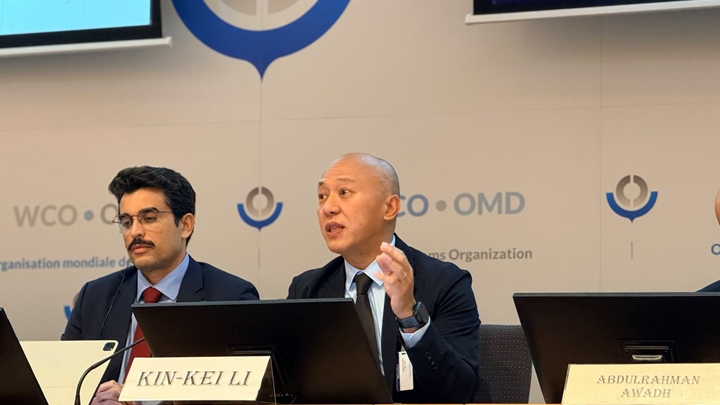
Hong Kong's Customs and Excise Department (CED) Deputy Director-General Li Jianji led a delegation to Belgium for the Global Event of the World Customs Organization's Smart Customs Project, from October 29 to 30. CED's social media page detailed the delegation's activities, highlighting that Li Jianji introduced ValidAP, an innovative project conceived by CED, during the conference. ValidAP is a verification platform that utilizes cryptography and blockchain technology to provide real-time and accurate authentication of electronic documents, including those related to international trade. At the conference, Li actively participated in discussions and shared practical experiences with customs representatives from around the world, promoting the implementation of smart customs initiatives to address the evolving challenges of global trade and customs operations. This event was a key international exchange activity within the Global Event of the Smart Customs Project, focusing on international standards and best practices in the digital transformation of customs, and enhancing information exchange and cooperation among customs services worldwide. Over 500 customs officials, industry representatives, and related institutions from around the world attended the event, creating a significant platform for collaboration and exchange in the realm of smart customs. The Smart Customs Project is supported by the China Customs Cooperation Fund and is jointly organized by the World Customs Organization, encompassing various advanced technologies such as blockchain, artificial intelligence, Internet of Things, and cloud computing, aiming to bridge the digital gap, optimize customs clearance processes, and balance trade facilitation with border security.
Hong Kong's participation in this international event underscores its leading role in the application of advanced technologies within customs operations. Li Jianji's introduction of the ValidAP project demonstrates the CED's commitment to innovation and the implementation of cutting-edge solutions to enhance trade efficiency and security. The project's integration of blockchain and cryptography highlights the department's focus on modernizing customs procedures through secure and transparent digital solutions. By positioning itself at the forefront of these developments, Hong Kong is not only aligning its customs practices with international standards but also playing a crucial role in shaping the future of global customs management. The event's emphasis on information exchange and collaboration further reinforces the need for international cooperation in the face of the rapidly changing global trade landscape.