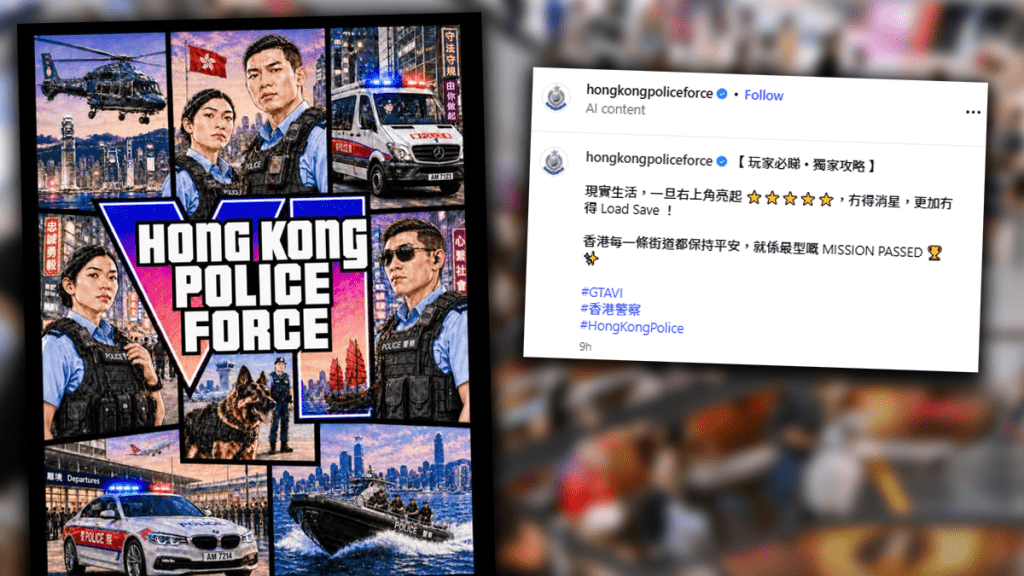

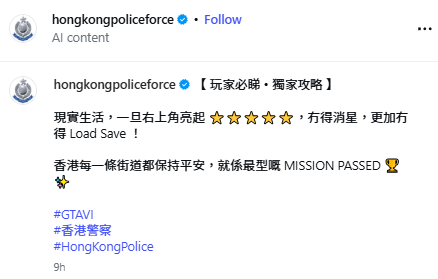
The highly anticipated video game Grand Theft Auto VI (GTA6) was released on November 19, sparking a global wave of excitement among its fanbase. In response, the Hong Kong Police Force seized the moment to engage with the public through social media, using an AI-generated image mimicking the GTA6 game cover. The police post was titled "Essential Guide for Players," urging citizens that, unlike in the game, real-life offenses cannot be simply erased or "saved anew." While the police highlighted that "If the top right of real life lights up with ★★★★★, you can't remove the stars or load a save," they emphasized the importance of "PASSING the mission of keeping every street in Hong Kong safe." The stars mentioned in the post refer to the wanted levels in GTA, symbolizing the severity of law-breaking in the game. Social media users applauded the police for their innovative approach, some even suggesting that the police could collaborate with the game developers to create an application allowing citizens to experience police work and crime prevention.
The timing of the police's social media campaign aligns with the game's hype, suggesting a strategic use of current events to garner public attention. This innovative approach reflects a growing trend in law enforcement agencies using popular culture to communicate with younger audiences and promote public safety. The post and the accompanying discussion highlight the balance between utilizing mainstream media to reach a wider audience and maintaining the seriousness of law enforcement messages.
GTA6, developed over 13 years, has been a cultural phenomenon, with its intricate world and complex narrative gaining massive popularity. The Hong Kong Police Force's creative use of the game's fame for public awareness purposes demonstrates an attempt to bridge the gap between law enforcement and the general public. Such initiatives not only enhance the police's visibility but also encourage public participation in maintaining a safe community, potentially redefining the relationship between law enforcement and the public in the digital age.