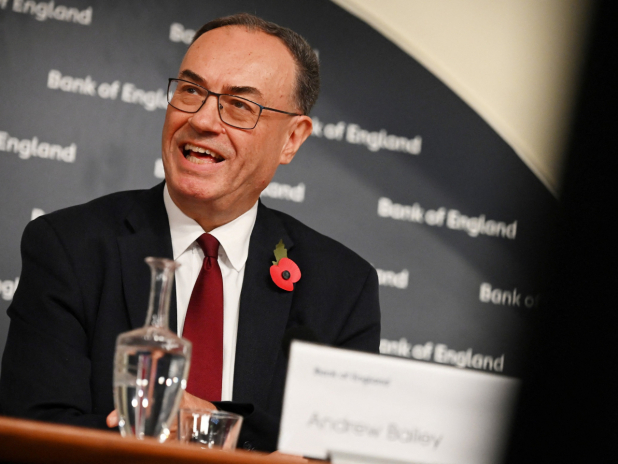
The Bank of England increased its benchmark interest rate to 4 percent on Thursday, marking the first rise in over three years, in response to escalating energy costs driving inflation. This move brings the UK in line with the US Federal Reserve and the European Central Bank in raising rates since the onset of the Middle Eastern conflict. BoE Governor Andrew Bailey stated in a press release, "There is now enough inflationary pressure in the pipeline caused by the rise in energy prices that an increase in Bank Rate is warranted." However, Bailey also noted that unless the conflict in the Middle East is resolved, further rate hikes may still come. Despite the inflation surge, the BoE has revised its economic growth forecasts for the UK. It now projects gross domestic product (GDP) growth of 1.6 percent for this year and 1.3 percent next year, compared to earlier estimates of 1.1 percent for both periods. The Bank last raised the key interest rate in August 2023 and has maintained the cost of borrowing at 3.75 percent since December. In September, Britain's annual inflation rate surged to 3.5 percent, surpassing the BoE's target of 2 percent. The central bank predicts UK inflation will peak at 4.9 percent in the second quarter of next year. Countless British households are preparing for a significant increase in energy bills starting next year, even after receiving partial government aid in their annual budget announcement. (AFP)
The announcement of the rate hike comes as millions of British households face a substantial rise in energy costs, with the government having provided limited relief in its recent budget. The BoE's decision to raise rates aligns with global central banks, reflecting the broader impact of soaring energy prices and regional conflicts on inflation. However, the bank's economic growth forecasts have seen a slight upward trajectory, which may provide some solace amidst rising costs and inflationary pressures. (AFP)
The Bank of England's interest rate hike on Thursday is part of a wider global trend aimed at managing inflation spikes in the face of higher energy costs. The decision follows actions by the US Federal Reserve and the European Central Bank, indicating a coordinated approach to the challenges posed by geopolitical tensions and supply disruptions. While the rate hike is expected to temper inflationary pressures, the outlook remains uncertain, particularly given ongoing conflicts that could lead to further rate increases if unresolved. (AFP)