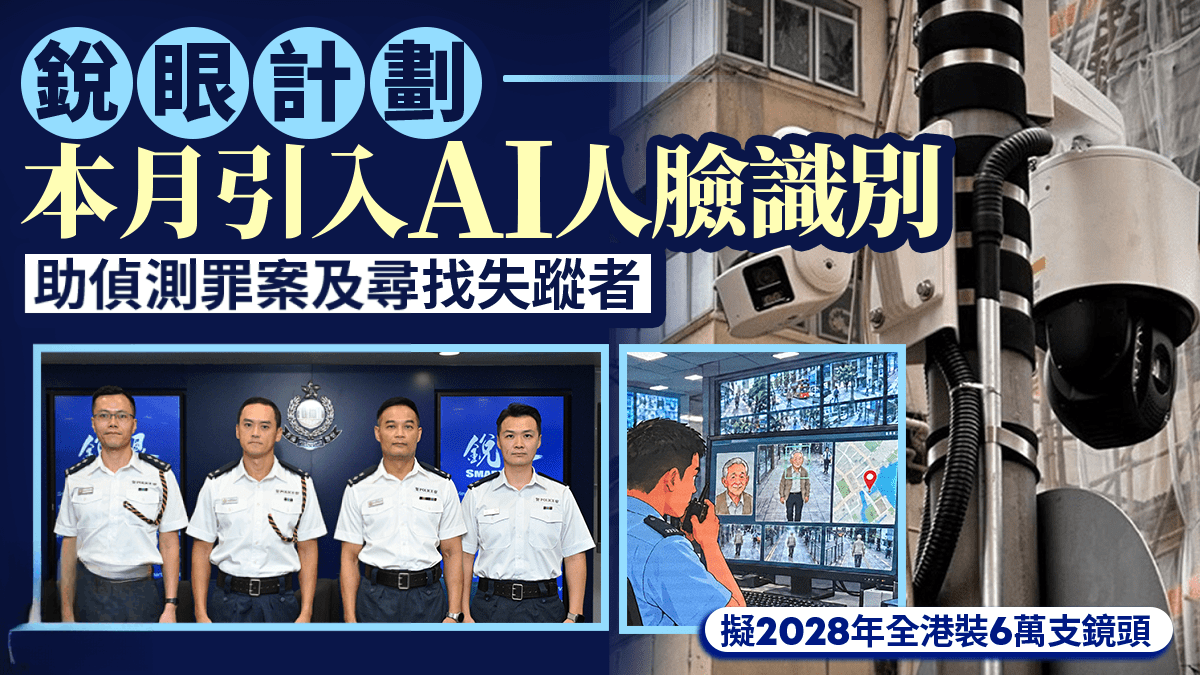
The Hong Kong Police Force is promoting the 'Sharp Eye Plan' (Smart View) to enhance law enforcement efficiency. Under this initiative, artificial intelligence (AI) facial recognition will be integrated into the city's closed-circuit television (CCTV) systems to more accurately and swiftly detect criminal activities and locate missing persons, notably those with cognitive impairments who are at high risk of going missing. Deputy Commissioner of Operations of the Hong Kong Police, Lam Ming Luen, explained that the traditional method of monitoring and analyzing CCTV footage is labor-intensive and time-consuming. Now, with the introduction of AI facial recognition technology, the workload can be significantly reduced, allowing for more efficient crime detection and swift assistance in locating missing individuals, including those with cognitive impairments. The police aim to increase the coverage of the city's CCTV network to approximately 60,000 cameras by 2028. So far, over 10,000 cameras have been installed, and the police are pursuing a second phase that involves expanding the network to strategic locations across the territory, including public facilities, key roadways, public housing estates, sports venues, and border control stations. With the participation of some large shopping centers, the first batch of CCTV cameras from these centers are expected to be integrated into the 'Sharp Eye Plan' by the end of this year, facilitating remote surveillance for police officers without the need to physically visit these locations. Concerning privacy issues, while the police acknowledge storing facial recognition data longer than 30 days for investigative purposes, they have implemented dual network defenses, including a dedicated fiber optic network and firewalls. Additionally, data retention is constrained by legal and public interest considerations, ensuring that citizens' privacy rights are adequately protected.
Star Headline
Published: 2026-11-06 00:01:01
Sharp Eye Plan Boosts AI Face Recognition for Swift Missing Person Searches by 60,000 Cameras in Hong Kong by 2028
The Police Force is rolling out the Smart View program, integrating AI face recognition into CCTV systems to cover 60,000 cameras in Hong Kong by 2028, focusing on swiftly locating vulnerable missing seniors with cognitive impairments.
Source:
Star Headline ↗