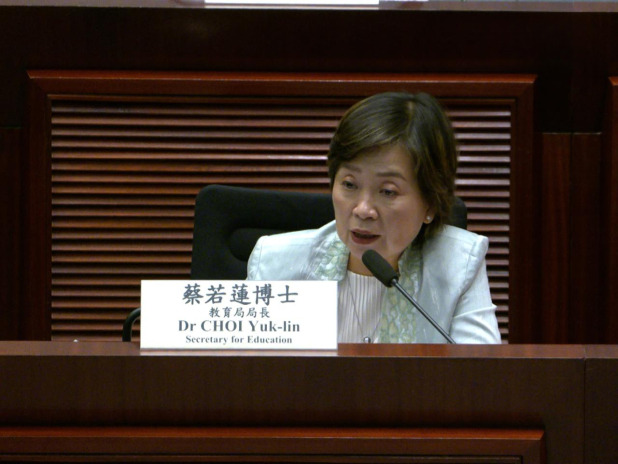
Christine Choi, Secretary for Education, announced her bureau would seek additional funding to support the development of university towns in the Northern Metropolis. Universities would require more than the HK$10 billion loan budgeted for campus construction, she noted. However, the government must consider prioritizing public funding allocations. In phases, development of the three university towns—located in San Tin, Hung Shui Kiu, and Ta Kwu Ling—was planned, which reduced the need for institutions to heavily borrow. The Hung Shui Kiu University Town, covering about 26 hectares, had been accepting applications since September. Institutions were advised not to rush to secure sites, as they constituted less than 10% of the 300-hectare Northern Metropolis university town area. Regarding participation by external universities, Choi suggested that mainland universities would likely collaborate with local institutions for joint laboratories and research centers, considering financial and geopolitical factors. During a Legislative Council session, she highlighted the unique position of Hong Kong's university town plans, distinguished by their compounding advantages. Hong Kong's global reputation for academia and research, combined with attractions for top talent and unique policies and legal systems, were mentioned as key factors. Hong Kong was also seen as a complement to other university towns on the mainland.
The development of university towns reflects broader efforts to enhance Hong Kong’s education sector and research capabilities. These towns are part of a strategy to boost innovation and attract foreign talent and investment. As such, the funding and development efforts are crucial to establishing Hong Kong as a global hub for higher education and research. Given the multifaceted nature of the project, the government’s approach to funding and collaboration is expected to continue shaping the landscape of higher education in the region.
Despite the emphasis on collaboration and global standing, the plans for university towns also face logistical and financial challenges that must be addressed. The phased development approach aims to minimize immediate financial burdens on participating institutions. Additionally, the strategic location of these towns within the Northern Metropolis offers a promising setting for increased educational opportunities and academic collaborations. As the project progresses, the integration of Hong Kong’s strengths—such as its global connections and research reputation—with the potential for on-the-ground developments in these towns will be key to their success.