
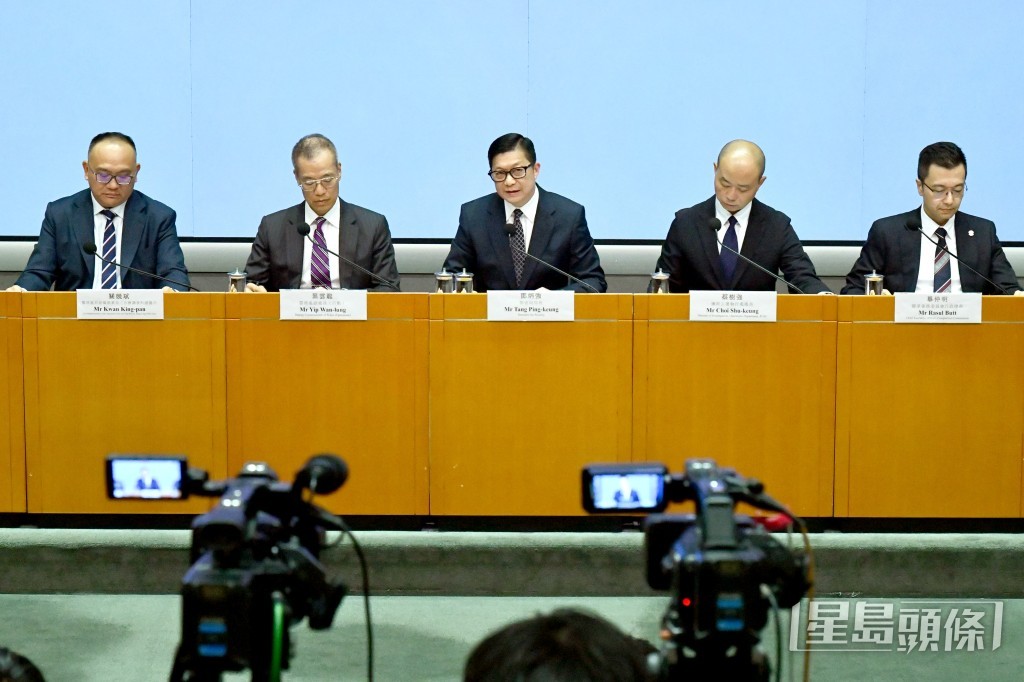
A joint anti-bid-rigging taskforce organized by the Security Bureau, including the Police Force, the Commission on Competition, and the Independent Commission Against Corruption (ICAC), conducted a two-day 'Operation Joint Thunderbolt' (Operation Thunderbolt) from November 5 to 6 to dismantle a bid-rigging syndicate run by triad associations. On the second day of the operation, ICAC investigators visited three locations in new Pokfulam to gather evidence. Inside a commercial building on Yat Lok Street, ICAC personnel seized a large amount of documents from an engineering company's office. In addition, one man each from two engineering company offices at Shun Hai Street and Liu Hou Street were later escorted by ICAC personnel back to their offices for investigation. Both men were taken away at around 9:00 PM. Dozens of people, including 66 suspects, have been arrested so far, 28 of whom are suspected of operating as directors or staff in six construction companies, ten consulting firms, one property management company, and one owners' corporation. Among those arrested, some have triad backgrounds. The suspects are alleged to have committed offenses under the Prevention of Bribery Ordinance, Theft Ordinance, Criminal Offences Ordinance, Gambling Ordinance, and Competition Ordinance. The Competition Commission also used court orders to search the premises of the suspects and exercised compulsory powers under the Competition Ordinance to demand the submission of documents and appear for examination. The taskforce conducted searches in 78 locations, including the offices of multiple construction and engineering consulting companies, as well as the residences of the suspects, seizing related documents and accounting records of building maintenance projects. The investigation also revealed that the syndicate controlled building maintenance projects through various means, including bribing committee members, using dummy registered inspectors and engineering consultants to evade regulation, and utilizing a bid-rigging scheme. The case involved 12 estates and factory buildings, with a total value exceeding one billion Hong Kong dollars. The syndicate was allegedly composed of six construction companies and ten engineering consulting firms, using various ways to obscure their relationships. They would control building maintenance projects by buying units in target buildings before receiving mandatory inspection orders, arranging group members who were not residents to serve as committee members. Additionally, members of the syndicate would hold key positions within the committee, such as treasurer and secretary, to manipulate future bidding processes. Some members held positions in multiple buildings, effectively becoming professional committee members. When buildings received inspection orders, the syndicate would manipulate building professionals, who would become blind signatories of required documents. Some involved professionals simultaneously handled over 80 projects and could not maintain professional standards or thoroughly review engineering details. Furthermore, the syndicate would have members impersonate deceased professionals to sign relevant engineering documents. During the bidding stage, the syndicate used low bids from collaborating consulting firms and submitted "ghost bids" or "pigs" to create an appearance of competition, employing illegal methods like intimidation, harassment, bribery, etc., to force rival companies to withdraw. After winning the bid, with the help of infiltrated committee members, the syndicate would manipulate the employment of construction companies, exaggerating project details and underestimating building problems, leading to increased engineering costs for owners who did not have the necessary professional knowledge. Finally, the syndicate used fake "consultancy agreements," fabricated sub-contracting, and "false accounting" to hide and launder criminal proceeds, attempting to evade the investigative authorities and use funds to finance other illegal activities.