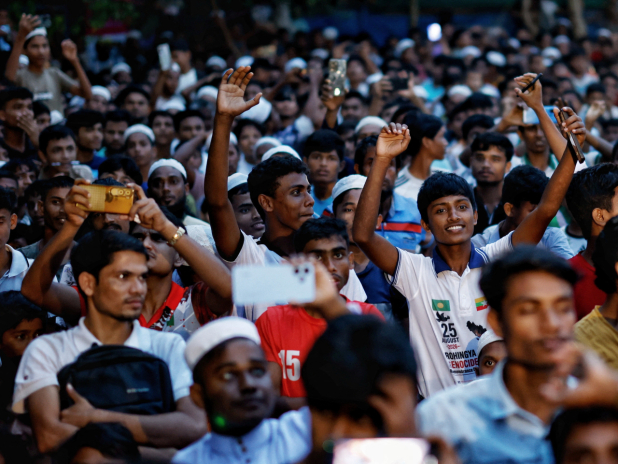
Myanmar has been declared guilty of genocide against its Rohingya minority by the International Court of Justice (ICJ), marking the first time in the court's 80-year history that such a determination has been made. The ruling not only orders Myanmar to allow safe passage for Rohingya refugees back to their homes and to consider compensation, but also underscores the extreme violence faced by the population. UN Secretary-General Antonio Guterres and other leaders hailed the decision as a significant step for international justice. ICJ President Yuji Iwasawa pronounced the verdict, stating that Myanmar had committed genocide against the Rohingya in northern Rakhine state. This judgment followed detailed evidence of the Myanmar military's atrocities, including the killing of thousands of Rohingya civilians and the widespread sexual violence and extreme violence against children. The court further noted that Rohingya villages were systematically destroyed, replaced with non-Rohingya inhabitants, which they concluded indicated an intent to destroy the population—a key threshold for genocide.
Hundreds of Rohingya refugees gathered in Cox's Bazar, the world's largest refugee camp in Bangladesh, to witness the historic ruling played out on a giant screen. The court's verdict brought tears to many faces, validating their claims of genocide. Mohammed Osman, whose family was killed by Myanmar's military, expressed overwhelming relief but also pointed to the ongoing struggle for genuine repatriation with dignity. The ICJ's judgment seeks to address not just the past but also future accountability, mandating Myanmar to investigate and punish suspected genocidaires and providing for future compensation deliberations.