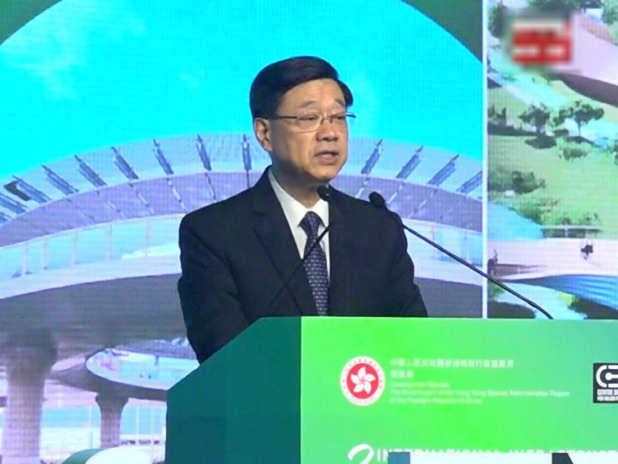
Chief Executive John Lee asserted that Hong Kong is well-positioned to contribute to enhancing the construction sector's global standing and competitiveness, aligning with the national 15th Five-Year Plan goals. Lee emphasized Hong Kong's role in bridging the country's capabilities with international opportunities and providing professional support to transform these opportunities into impactful projects. At the opening of InfraEX Week, a gathering of infrastructure leaders, government officials, and professionals from over 30 countries, Lee highlighted the strategic importance of Hong Kong's first five-year plan in future development and integration into the national development blueprint. Lee pointed to the Northern Metropolis project, which covers one-third of Hong Kong's area, as a clear example, noting that it will eventually accommodate 2.5 million people, create 500,000 jobs, and contribute about 13 percent to the city's GDP. He also discussed plans for integrating innovation, industry, and education with the Hong Kong Park of the Hetao Shenzhen-Hong Kong Science and Technology Innovation Cooperation Zone and three planned university towns. Lee underscored the importance of delivering projects that are quality-oriented rather than quantity-focused, especially in initiatives like the Northern Metropolis. He emphasized incorporating advanced technologies such as artificial intelligence and construction robots to enhance productivity and cost-effectiveness. In his remarks, Lee highlighted Hong Kong's services expertise, including engineering, project management, legal, and financial services, and used the example of a footbridge built with domestically produced high-strength steel to illustrate Hong Kong’s role as a super connector and super value-adder. He anticipated concrete collaboration with international and local partners through the exchange of memorandums of understanding and a letter of intent.
Lee mentioned the utilization of advanced technologies including artificial intelligence, advanced engineering technologies, and construction robots in the construction process. He believed these technologies would improve productivity and cost-effectiveness, making Hong Kong's infrastructure projects more future-ready. He also noted the growing role that Hong Kong's professional services sector, ranging from engineering to legal and financial services, plays in supporting large-scale infrastructure projects. Each of these areas contributes to Hong Kong’s ability to meet the challenge of building future-ready infrastructure.
The Chief Executive's speech reflected a broader strategy to leverage Hong Kong's strengths in professional services and advanced technologies to enhance its contributions to national infrastructure projects. By focusing on high-quality projects and integrating cutting-edge technologies, Hong Kong aims not only to support national development but also to position itself as a key player in global construction and innovation sectors. The emphasis on collaboration with international and domestic partners underscores a concerted effort to maximize the value of Hong Kong's expertise in infrastructure development and management.