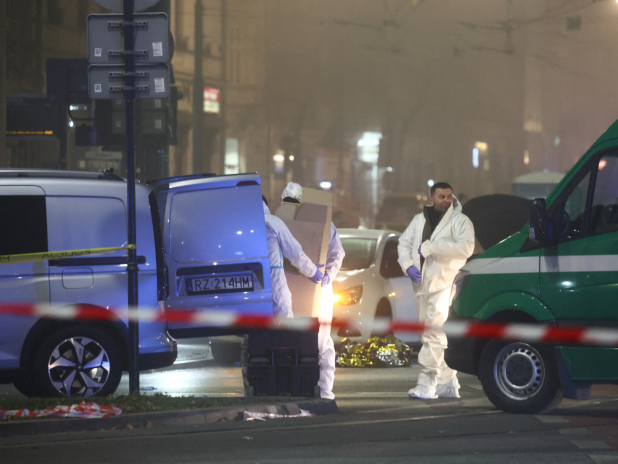
On Saturday, a lone gunman opened fire in Krakow's Main Market Square, Poland's second largest city, killing six people and injuring a dozen more. The attacker, identified as a Polish citizen, drove his car into the historic center and began firing at random pedestrians. Police brought the suspect under control after he was shot, and he is currently in custody. Multiple ambulances were dispatched to the scene, and police cordoned off the area, which is a popular tourist destination.
The incident, Poland's most fatal shooting since the fall of communism in 1989, occurred without any immediate motive being disclosed, nor were the nationalities of the victims mentioned. Polish Prime Minister Donald Tusk arrived in Krakow and condemned the attack, praising the brave actions of the police officers who responded to the shooting. Witnesses described chaos as people sought refuge in nearby establishments, with one visitor noting the stark contrast to the nearby concentration camp of Auschwitz. This series of tragic events marks the resurgence of violent incidents in Poland, following a recent period of heightened security awareness due to stabbings in October. Additionally, there has been a notable increase in firearm ownership in the country, with more than 50,000 new licenses issued in 2025.
The shooting raises concerns about the evolving security landscape in Poland, given the country's alliance with the European Union and NATO, and its 38 million inhabitants. As security measures intensify, the incident also serves as a poignant reminder of the ongoing challenges faced by European nations in maintaining public safety and order. The situation in Krakow is being closely monitored by both local authorities and the international community as the investigation continues.