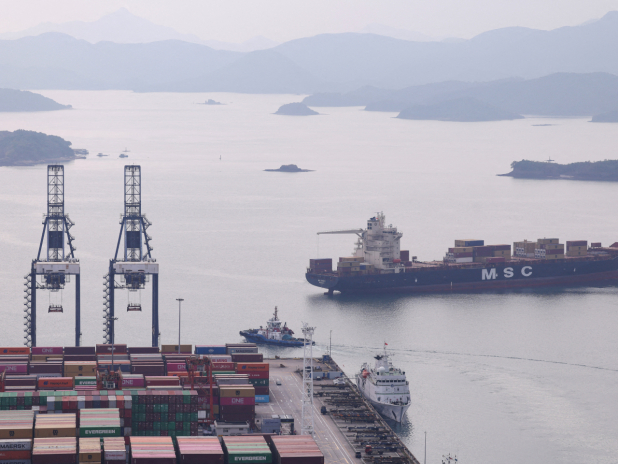
China's trade surplus surpassed $1 trillion for the second consecutive year, according to official data released on Tuesday. Foreign trade in goods continued to grow strongly in the first ten months of 2026, with imports experiencing particularly strong growth. Exports increased at a rate of 35.2 percent year-on-year to $412.3 billion in October, while imports grew by 41.6 percent to $307.1 billion. Between January and October, the country recorded a trade surplus of $1.04 trillion, though this was narrower compared to the surplus of $133.5 billion in September, as imports rose significantly. The trade surplus is expected to exceed last year's record of $1.2 trillion. Meanwhile, exports to the United States experienced a 32.9 percent growth in October, and a meeting between President Xi Jinping and US President Donald Trump is scheduled at the APEC summit in Shenzhen next week. The potential risks of additional tariffs and trade barriers remain, especially as Chinese manufacturers expand their global presence. The strength in exports this year is largely attributed to the global push for AI infrastructure, with the outlook depending on the longevity of the AI boom. Macquarie analysts predict an acceleration in exports in the fourth quarter, followed by a slowdown in early 2027.
Analysts, such as Dave Chia from Moody’s Analytics, anticipate robust growth in exports for the remainder of the year, driven by electronics and automobiles. Imports were particularly strong, growing by 41.6 percent, significantly exceeding the growth rate of exports. The trade balance narrowed in October, reflecting the accelerating pace of imports. Further, China extended its trade truce with the US by two months, maintaining the status quo but stressing that future US purchases of Chinese goods depend on the implementation of agreed tariff reduction measures. Joe Peissel from Trivium China noted that the risk of new trade barriers will remain high, intensifying China's reliance on exports, which could become vulnerable to a slowdown in global demand. However, the strong performance of AI exports indicates a sector-specific resilience, suggesting continued growth in this field.
The data came as China prepares for a key diplomatic meeting with the US, where the truce between the world's two largest economies in terms of trade is expected to be revisited. The ongoing trade truce is a fragile achievement, built upon a series of negotiations since October 2025. The extension of the trade truce will continue to shape China’s export strategies and global trade relations, while also influencing the broader international economic landscape. The strong AI sector, which has been a significant driver of China’s export growth, will remain a critical factor in the future of its trade relations with key partners. The coming months will be pivotal in determining the sustainability of this growth trajectory.