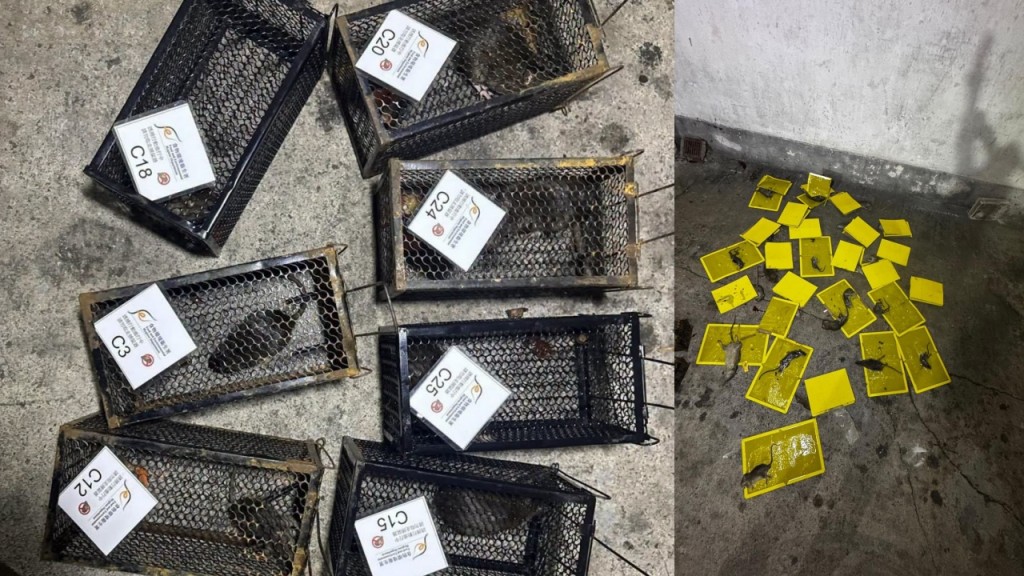
The Food and Environmental Hygiene Department (FEHD) has launched the "Thunderbolt Operation" across Hong Kong to tackle rodent infestations, following the "Cease and Desist" operation earlier. Starting from November 4, the new operation targets major hotspots based on risk assessments and data analysis, focusing on the primary habitats and breeding grounds of rats. In a targetted operation at Kam Sheung Street, Kwun Tong, the FEHD reported capturing over 50 rats in the first night alone using night-time rat control teams and advanced traps. The "Thunderbolt Operation" involves three main strategies: analyzing data and intelligence to pinpoint hotspots, intervening in high-risk sites managed by other government departments, and employing both chemical and physical methods to control rodent populations effectively.
From November 4, the FEHD conducted the "Thunderbolt Operation," covering 1,373 key locations across Hong Kong. Among these high-risk sites, 199 potential rat hideouts and nesting points were identified, with 15 out-of-compliance notices issued to premises in Kwun Tong, leading to the capture of 103 live and 51 dead rats. Additionally, the FEHD has considered legal actions against the property owners for persistent rodent issues and will review the operation's success through ongoing monitoring and resource reallocation to address critical hotspots. The FEHD emphasizes the urgent need for cooperation between the government, businesses, and citizens to maintain cleanliness and prevent rats from thriving.
The operation aims to swiftly eliminate rodent problems by combining proactive and reactive strategies. For the "Thunderbolt Operation," the FEHD utilizes advanced technologies such as AI and specialized traps. The "Cease and Desist" operation, on the other hand, primarily focuses on inspections and enforcement to ensure businesses and property managers are complying with hygiene and pest control regulations. Both operations work together to address the root causes of rodent infestations effectively. The FEHD stresses the importance of maintaining a clean environment to prevent rats from finding food and shelter, thereby reducing rodent populations.