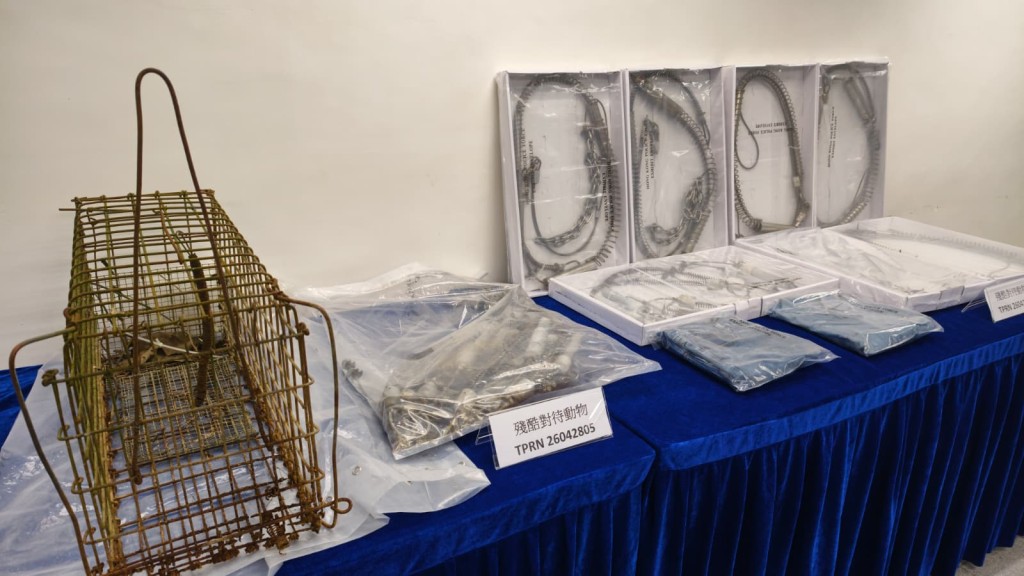

In a shocking incident in Tai Po, two local Wen men, aged 54 and 67, were arrested for allegedly cruelly killing a stray dog and leaving it hanging from a tree. The crime occurred near a stone house on Ma Wo Road, where authorities discovered the dog's body with severe injuries to its hind legs. The dog, adopted by the 54-year-old suspect a year ago, was found strung up in the garden of the stone house, and multiple illegal snaring devices and traps were recovered during the investigation. The case was initially reported by the suspect's 57-year-old sister, who acted as a whistleblower despite being a family member, alerting police to the crime scene where her brother and friends were seen behaving suspiciously.
The dog, described as a white, medium-sized local mixed-breed stray, showed no signs of a microchip and was found in a relatively fresh condition. Animal Welfare Association inspectors noted that the hind legs bore unnatural wounds, raising questions about the dog's death—whether it was killed before being hung or suffocated after. Police are currently investigating whether the traps were specifically targeting the dog or could also be used for wild boars. While the suspects claimed to have other dogs at home, authorities confirmed these pets were unharmed. The investigation continues as forensic analysis of the dog's body is conducted by the Agriculture, Fisheries and Conservation Department.
Authorities have reiterated that cruelty to animals is a serious offense under Hong Kong's Prevention of Cruelty to Animals Ordinance, with penalties up to a HKD 200,000 fine and three years imprisonment. The Wildlife Protection Ordinance also prohibits the possession or use of snares without special authorization, punishable by up to HKD 50,000 in fines or one year in prison for protected species. Police are urging citizens to report suspected animal abuse or illegal traps found in the countryside immediately, emphasizing that such acts undermine both animal welfare and ecological balance. The 2711 1000 hotline of the Animal Welfare Association remains a key resource for public assistance.