
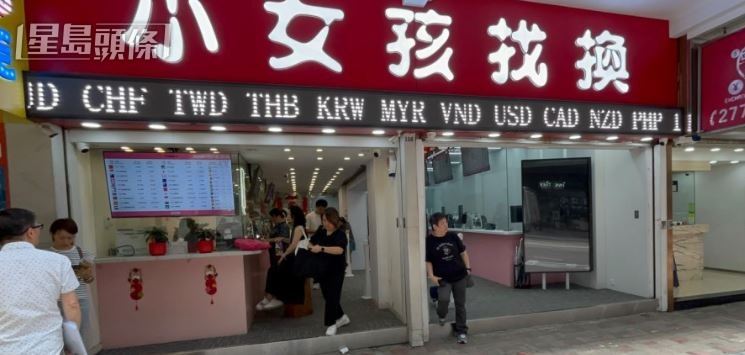
A fraud incident occurred at a currency exchange shop in Central, Hong Kong, involving a mainland man who attempted to defraud the store of 20,000 HKD using a fake WeChat transfer. The suspect, believed to be in his 30s and holding a mainland passport, claimed to have transferred 18,639 RMB to the shop on Saturday (21st) and presented a transaction confirmation screenshot. Due to the weekend shift, the staff member responsible for verifying electronic transfers was absent, and the on-duty employee, unaware of the deception, handed over the 20,000 HKD. The same man returned the next day (23rd) to request the exchange of 40,000 HKD using a purported 37,293 RMB transfer, but this time the staff detected the fraud when they discovered only 1 RMB had been transferred.
The shop's 37-year-old female employee, Ms. Shi, later recalled that the initial transaction on Saturday mirrored the recent attempt. Upon reviewing the records, she realized the first transfer had only been 18 RMB, resulting in the store losing approximately 20,000 HKD. This prompted the staff to immediately report the incident to the police. Authorities have since initiated an investigation, with officers searching for the suspect based on the staff's description. As of now, the man has not been apprehended, and the case has been classified as a fraud and referred to the Central Police District’s Criminal Investigation Department for further action.
The incident highlights the increasing sophistication of fraud tactics targeting currency exchange services. Scammers often exploit the trust placed in digital transaction confirmations and the potential for oversight during non-peak hours. This case is part of a broader trend where perpetrators use similar methods to repeat scams, aiming to exploit gaps in verification processes. The shop’s employees are now reviewing their procedures to prevent future incidents, while the police continue their search for the suspect. The amount of 20,000 HKD involved underscores the financial impact of such schemes, prompting calls for stricter adherence to verification protocols in the industry.