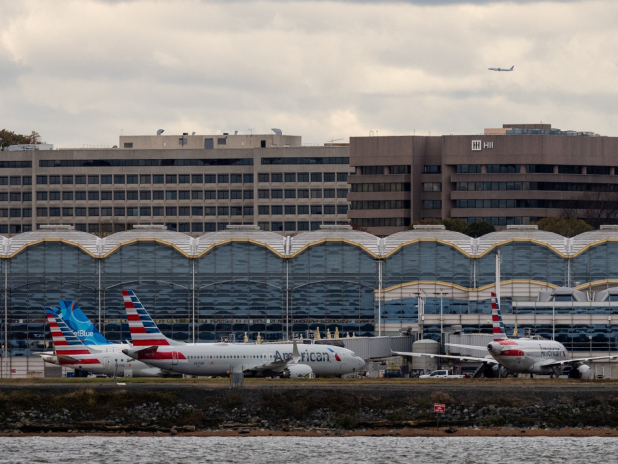
The US is facing a third day of air travel disruptions following a no-takeoff order, with nearly 2,000 additional flights cancelled. While officials initially aimed to return to normal by the close of business on Sunday, Transportation Secretary Sean Duffy issued a more cautious update, stating that it would likely take until Monday for planes, crews, and passengers to be in the right place. President Donald Trump blamed his predecessor Joe Biden for the mishap, asserting that he had inherited a mess from the Biden administration and that Congress, which has been controlled by Republican Partisans for two years, should allocate funding for upgrading the outdated air traffic control system. The disruption, which originated from faulty work during the replacement of air traffic control communication cables, has raised concerns about the state of the nation's aging infrastructure and prompted the need for $50 billion in infrastructure funding.
The transportation secretary, Sean Duffy, rejected calls for his resignation, emphasizing that he inherited an outdated system, including radar equipment from the 1960s, that was poorly maintained by the previous administration. Duffy highlighted the challenges posed by the upgrade process, explaining that airplanes and crews were out of position and required extra time to be realigned. The FAA chief pointed to ongoing modernization efforts, requesting that Congress appropriate the necessary funds for improved infrastructure. Infrastructure Democrats countered that the Republican-controlled Congress could have acted earlier to fund such upgrades.
The Federal Aviation Administration has acknowledged that Friday's ground stoppage — the second such incident since the 9/11 attacks — was caused by faulty work on new communication cables, affecting more than 1,880 flights as of Sunday afternoon. The disruptions highlight the precarious condition of the country's air traffic control systems, with upgrades long overdue. The administration's push for $50 billion in new funding reflects the urgent need to address aging infrastructure, a problem exacerbated by inadequate investment and maintenance. As the situation drags into a third day, passengers and airlines are increasingly frustrated, putting pressure on both the FAA and Congress to act swiftly.