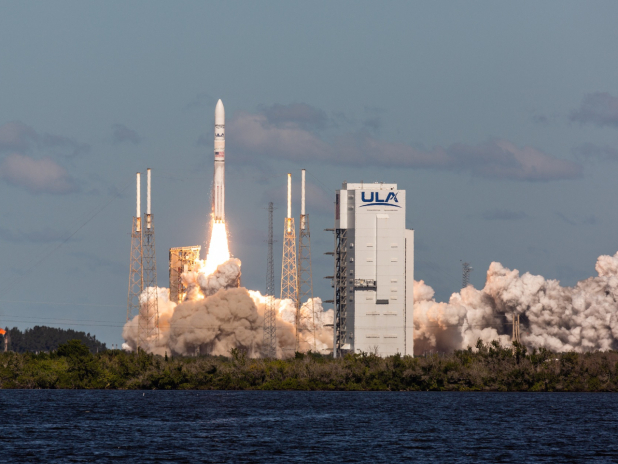
On Sunday, a United Launch Alliance (ULA) Vulcan rocket, which is jointly owned by Boeing and Lockheed Martin, suffered a failure shortly after launch from Cape Canaveral Space Force Station in Florida. The rocket failed approximately 10 minutes into flight, resulting in the destruction of the payload, which comprised 40 Amazon satellites intended for the company's Leo internet network. This marked the first mission failure for the Vulcan rocket. In a statement, ULA confirmed, "Based on data received by our Launch Director, we confirm that the Vulcan vehicle launched from Space Launch Complex 41 suffered an anomaly 10 minutes into the flight and failed to deliver the Amazon mission to orbit." The company stated that they do not have specific data yet to understand the cause of the failure, given that the anomaly just occurred. The launch was the fifth since the Vulcan rocket's debut in 2024, following a period of technical investigations into its solid rocket side-boosters and core BE-4 engines, both supplied by Blue Origin, the space company founded by Amazon's Jeff Bezos. The BE-4 engines, which experienced issues in recent launches, were expected to be modified based on findings from the New Glenn rocket's explosion in May. The exact role of the BE-4 engines in the current failure remains unclear.
The failure is a significant setback for Amazon's satellite internet constellation, which aims to rival SpaceX's Starlink network. Since 2025, only 398 Leo satellites have been deployed across 14 launches, accounting for just about 12 percent of Amazon's intended satellite deployment. With this most recent failure, Amazon faces further delays to its plans for deploying more satellites and launching internet service this year. The consecutive rocket failures highlight the challenges faced by third-party launch providers in the rapidly evolving satellite industry.
The persistent groundings and failures of launches by third-party providers have hindered Amazon’s plans to compete with SpaceX's extensive Starlink network, which boasts over 11,000 satellites and a considerable number of customers worldwide. Blue Origin's investigation following the New Glenn rocket's explosion determined that the engine was the cause, leading to modifications in the BE-4 engines for ULA's Vulcan. The current failure adds another layer of complexity to Amazon’s ambitious satellite deployment strategy.