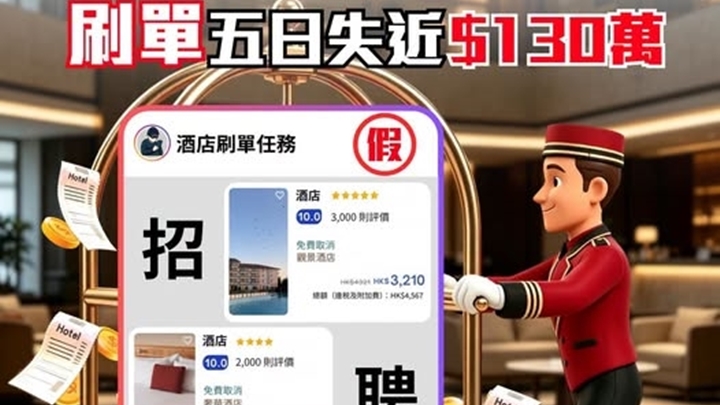
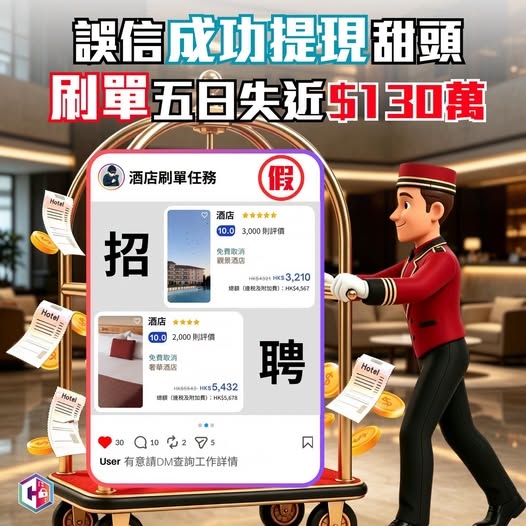
Over the past week, the police have received more than 20 online job scam reports, with total losses exceeding HKD 3.2 million. Among these cases, a 39-year-old housewife fell for a hotel booking and刷单 scam after responding to a part-time job posting on a social media platform. The victim initially earned a small fortune, successfully withdrawing approximately HKD 10,000 in commissions, which made her less cautious about larger transfers. In just five days, she transferred over 30 times to several of the scammer's accounts. When the scammer attempted to freeze her account due to alleged incomplete task completion, she was coerced into paying HKD 700,000 to unfreeze it, bringing her total losses to nearly HKD 1.3 million. The police posted a detailed account of the case on the "CyberDefender" webpage, explaining that the victim was initially attracted to the job posting on a social platform and contacted the scammer via WhatsApp. The scammer claimed she could earn substantial commissions by completing booking hotel tasks online. They provided a fake hotel booking website for the victim to register an account, entice her to deposit money to top up her account, and fulfill the booking tasks. Initially, the victim successfully withdrew around HKD 10,000 in commissions, making her more willing to invest more and continue following the scammer's instructions. However, when she tried to withdraw her principal and the commissions, she was told her account was frozen for allegedly not completing the task on time, and was asked to pay HKD 700,000 to unfreeze it. This is when she realized she had been scammed, but by then she had already transferred over 30 times in five days, leading to a loss of nearly HKD 1.3 million. The victim is a 39-year-old woman, and the case is now under investigation by the Kowloon West Criminal Investigation Unit for "fraud" activities.
The police are warning the public to be cautious of such scams, particularly those posted on social media platforms and involving virtual tasks. With the rapid rise in online activities, these scammers are increasingly targeting individuals with easy-to-perform, lucrative tasks that require money transfers. These scams often rely on victims' initial success to build trust before revealing the full extent of their deception. Authorities recommend that anyone who receives such job offers should verify the authenticity of the postings and communicate with potential employers through official channels before making any financial transactions.
In recent years, online booking and刷单 scams have become a prevalent issue in Hong Kong, following a global trend in tech-savvy and socially connected individuals. The ease with which these scammers can set up fake social media accounts and websites, as well as the anonymity provided by digital platforms, has facilitated the proliferation of such fraudulent activities. Experts caution that despite attempts by law enforcement to crack down on these scams, they continue to adapt and evolve, making it crucial for individuals and businesses to remain vigilant and informed about these emerging threats. The case highlights the critical importance of critical thinking and a thorough verification process when engaging in any online activities that promise quick and substantial financial rewards.